Most people arrive in Orlando with a theme park itinerary already locked in. That is understandable Walt Disney World, Universal Studios, and SeaWorld are world-class attractions. But Orlando itself is a genuinely interesting city, and visitors who never look beyond the resort corridors miss a different side of it entirely.
Downtown Orlando has a real skyline, walkable parks, and a cafe culture that locals actually use. Winter Park is one of the most refined small cities in Florida, with a park-lined avenue of restaurants and galleries that could hold its own in any American city. Mills 50 has the kind of independent food scene that food critics write about. College Park has the feel of a neighbourhood that has not been discovered yet. These areas do not require a theme park ticket, and they do not look anything like International Drive.
This guide covers the places that make an Orlando city tour worth planning — what each area offers, how to sequence a day across the city, which type of visitor each stop suits best, and why private transportation is the most practical choice for a multi-stop route across a metro of this size.
Downtown Orlando: City Views, Lake Eola, and the Urban Core
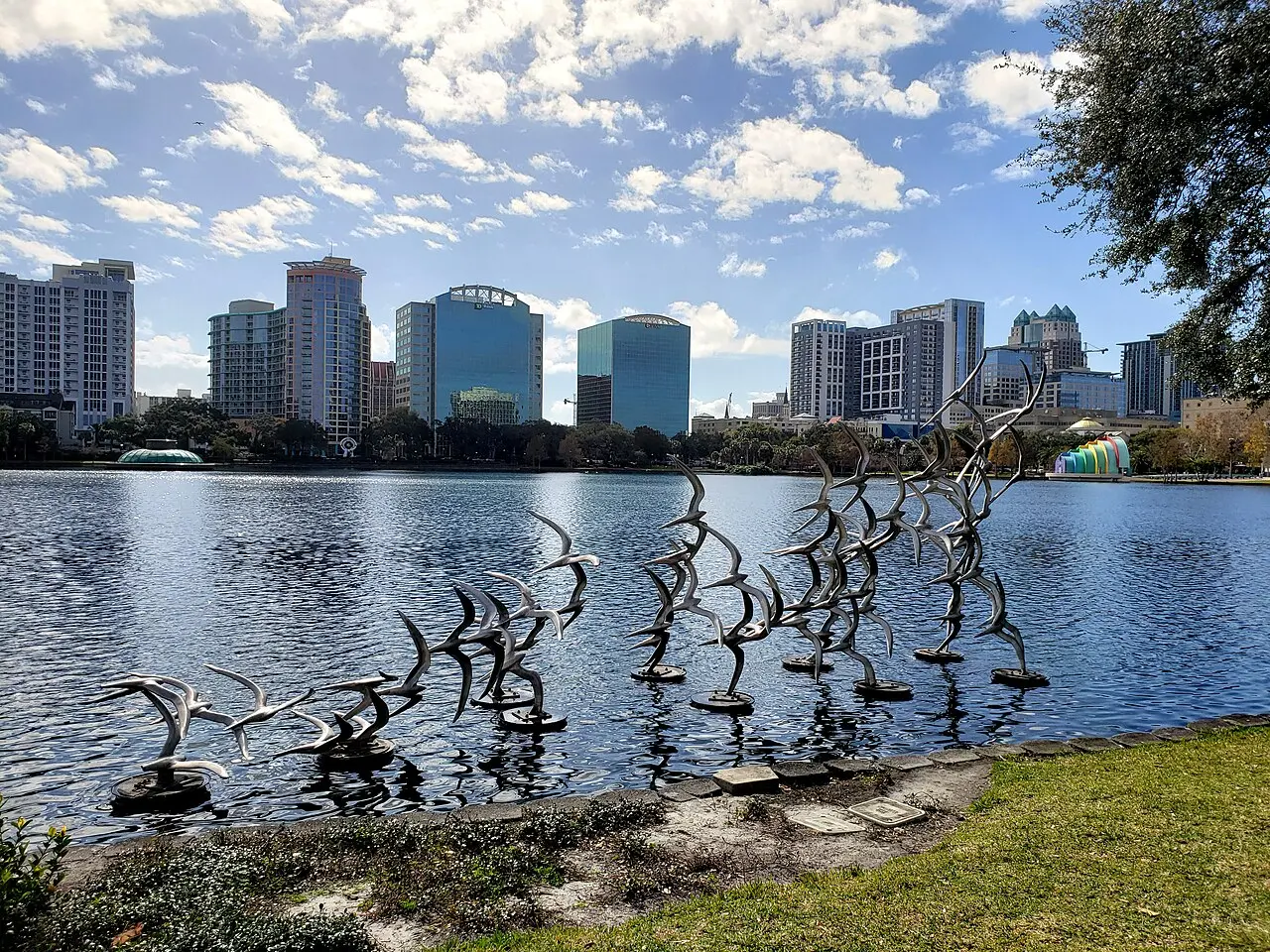
Downtown Orlando is the right place to begin a city tour. It gives visitors an immediate sense of Orlando as a functioning city rather than a visitor destination—the skyline, the office blocks, the morning foot traffic along Orange Avenue, and the genuine public space that Lake Eola Park provides.
Lake Eola itself is one of the more pleasant urban parks in Florida. The lake was originally a sinkhole, later filled and shaped into the centerpiece of a public park that sits about ten minutes from the heart of downtown. The fountain at its center is the most photographed landmark in Orlando that is not inside a theme park. On weekend mornings, the park fills with joggers, dog walkers, and families—it is genuinely used, which gives it a vitality that many tourist-facing parks lack.
For visitors doing a city tour, arriving downtown early in the morning is the practical choice. The heat is manageable before 10am, parking is less competitive, and the area has a calmer character that makes the walk more enjoyable. The surrounding streets — Wall Street Plaza, Church Street, and the Orange Avenue corridor — offer coffee shops and breakfast options before the day gets moving.
This stop suits first-time visitors who want a city orientation, couples looking for a relaxed morning walk, and anyone building a one-day Orlando itinerary that reaches beyond the resort areas.
Winter Park: Park Avenue, the Chain of Lakes, and a Slow Pace
Winter Park sits about twenty minutes north of downtown Orlando, and the difference in atmosphere is considerable. This is one of the most well-established small cities in Florida — tree-lined streets, a Rollins College campus, a collection of serious art museums, and Park Avenue, which is the kind of high-quality walkable shopping and dining district that most American cities struggle to produce.
Park Avenue runs along the edge of Central Park — a narrow strip of green space with fountains and benches that gives the street a civilised quality. The restaurants along the avenue range from casual cafés to proper white-tablecloth dining. The galleries and boutiques are genuinely independent. It is the sort of place where a two-hour lunch feels like an appropriate use of time.
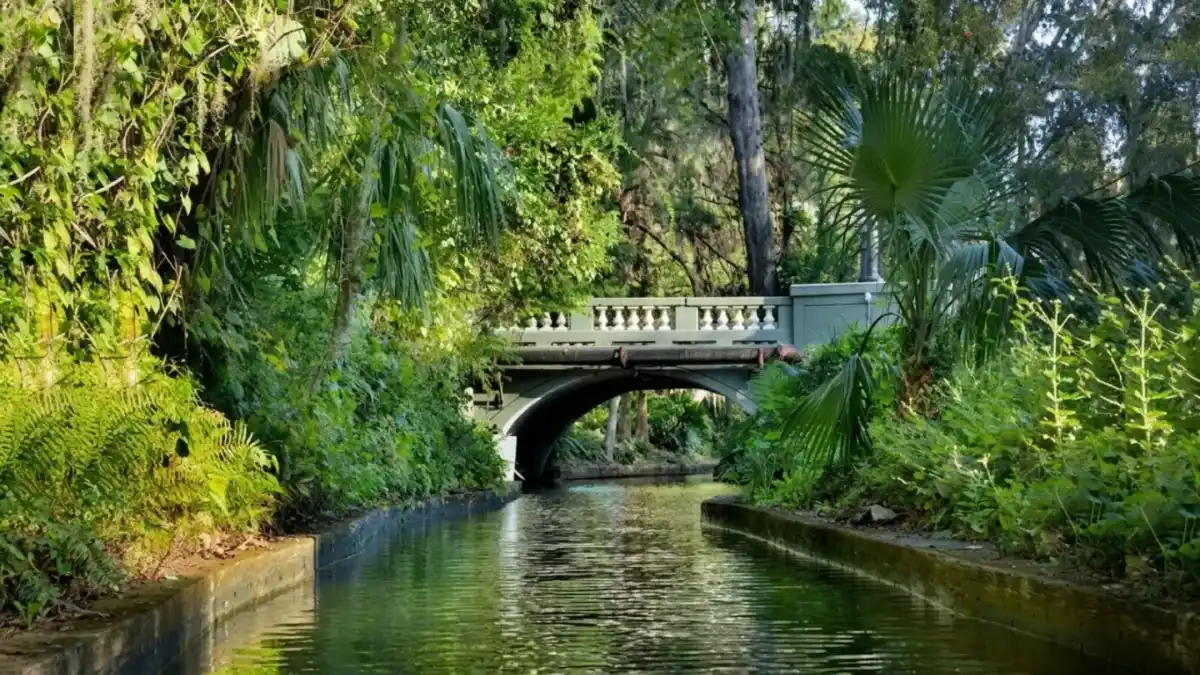
For visitors who want to see Orlando’s water geography, the Winter Park Scenic Boat Tour operates from the Chain of Lakes and offers a one-hour narrated cruise through the interconnected lakes and canals that wind behind some of the city’s most significant historic homes. It is unhurried, genuinely informative, and gives you a perspective on Winter Park that walking down the avenue does not.
Winter Park works particularly well as a mid-day stop. It gives a city tour breathing room when there is a point in the day where the pace drops, the meal is unhurried, and visitors are not competing with crowds. The distance between downtown and International Drive means that getting there and back independently involves real navigation. As part of a private city tour, logistics disappear entirely.
International Drive: Orlando’s Busiest Visitor Corridor
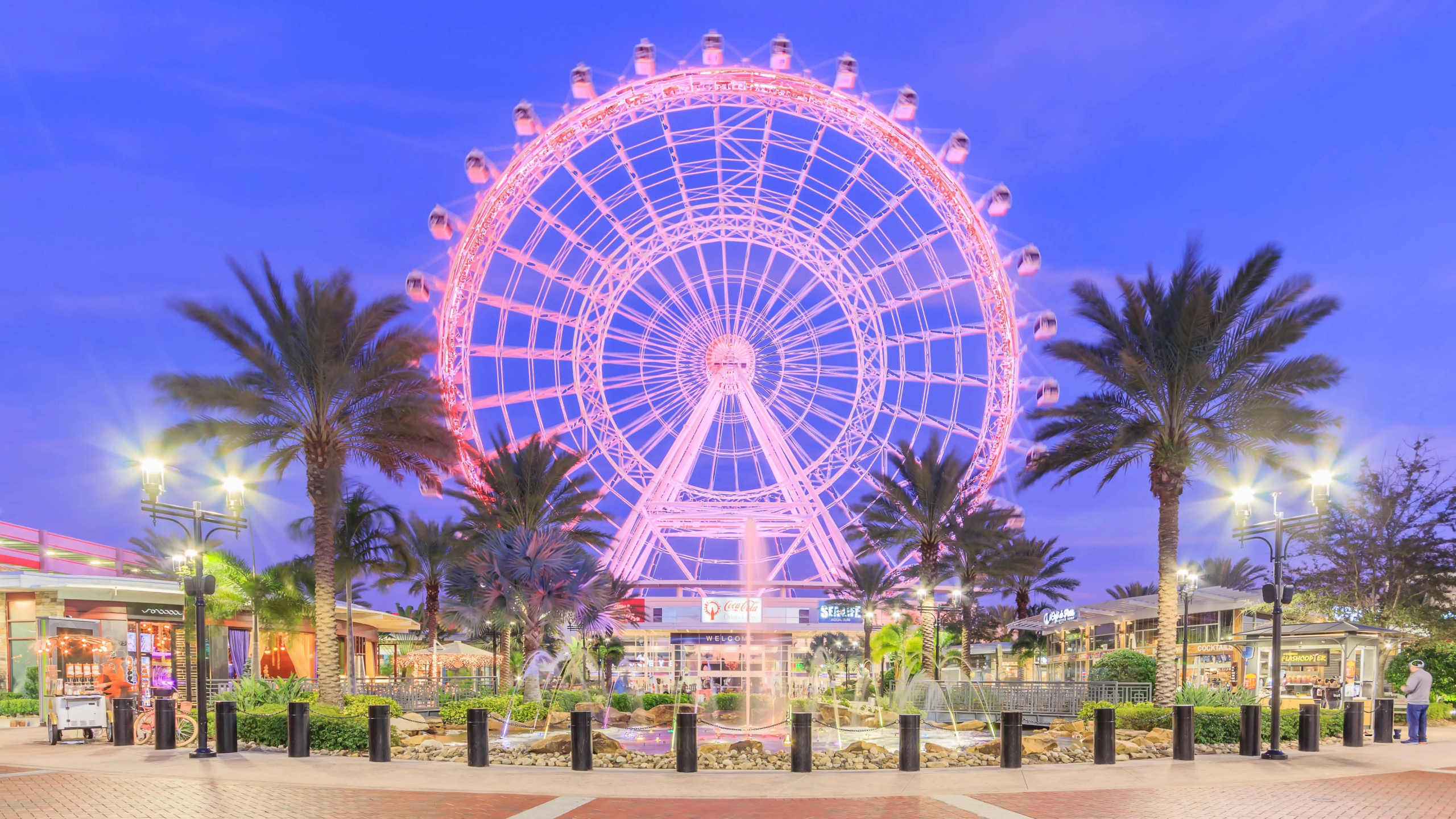
International Drive is what most people picture when they think of Orlando beyond Disney. It is a long, dense corridor of hotels, restaurants, entertainment venues, and attractions that runs through the centre of the city’s visitor economy. ICON Park sits along it, with the Orlando Eye observation wheel offering views of the wider metro. Dining options range from casual chains to proper restaurants. The energy is consistent and high.
This is not a neighbourhood in any residential sense — it exists entirely to serve visitors, and it does that job effectively. For families with children, for first-time visitors who want a lively evening, and for groups looking for entertainment density in one walkable stretch, International Drive delivers. The Orlando Eye is alone worth a stop for the views.
What International Drive does not offer is ease of movement. Traffic along the corridor can slow significantly during peak hours. Walking distances between venues are longer than they appear on a map. Parking structures are large and add time at every stop. For a single stop on a day tour, these logistics are manageable. For visitors moving between multiple points along the corridor, having a vehicle and driver who can drop off and collect at specific points removes friction entirely.
Disney Springs: Shopping, Dining, and an Evening Without a Park Ticket
Disney Springs occupies an interesting position in Orlando’s visitor landscape. It is a Disney property, managed to Disney’s standards, and it shows — the quality of the restaurants is high, the layout is well-maintained, and the evening atmosphere along the waterfront is genuinely pleasant. But it requires no park ticket and no park reservation, which makes it accessible to any visitor who wants a polished evening destination.
The restaurant selection is one of the strongest in the Orlando area. Chef Art Smith’s Homecomin’, Wine Bar George, and the Boathouse are all credible dining options rather than tourist-facing approximations of good food. The shopping includes a mix of brand stores and Disney-specific retail. The waterfront area, particularly in the evening, has a comfortable walkable quality.
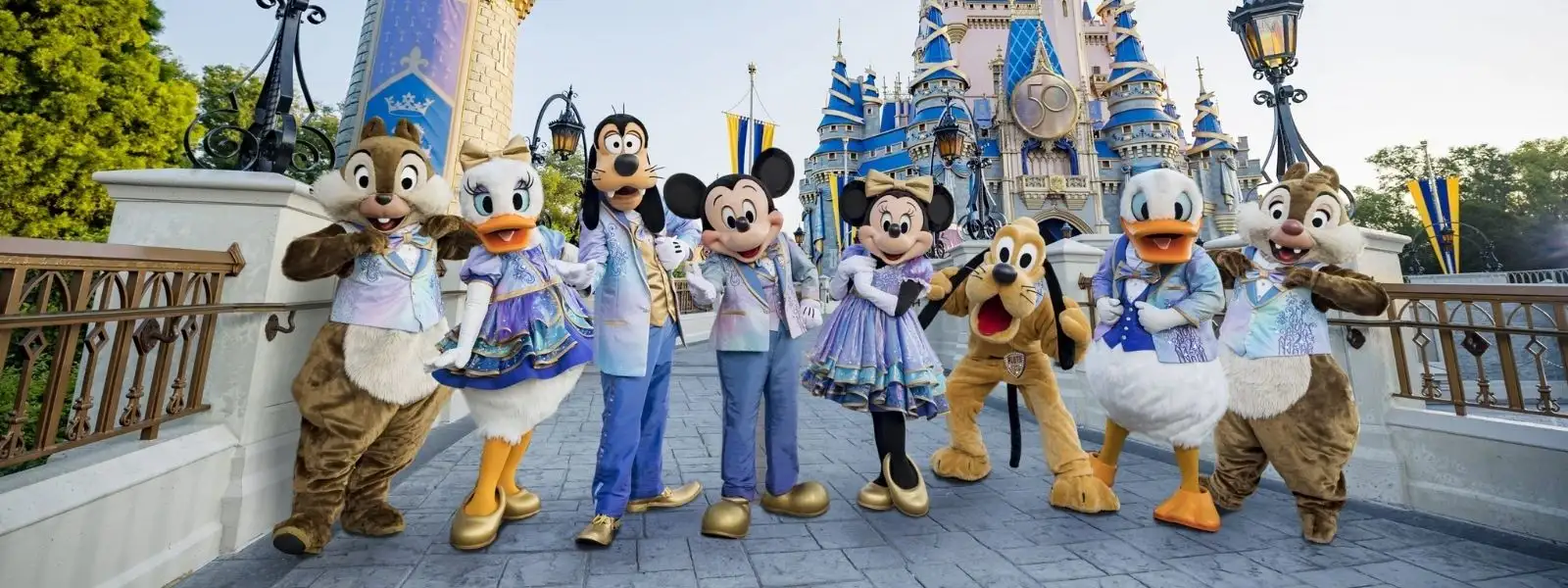
The practical challenge with Disney Springs is that arrival and navigation require some planning. The car parks are large, the walking distances from parking to the main areas are longer than expected, and exit congestion in the evening can be significant. Visitors arriving by private vehicle with a driver who handles drop-off and collection at designated points spend more of their evening in the venue and less of it navigating the infrastructure around it.
Disney Springs works well as a late afternoon or evening stop — a flexible ending to a day that has already covered the city’s daytime areas.
Mills 50: Orlando’s Independent Food District
Mills 50 is the area most often cited when locals are asked where they actually eat. It sits northeast of downtown, roughly centred on the intersection of Mills Avenue and Colonial Drive, and it has the character of a neighbourhood that developed organically rather than one that was planned for visitors.
The food scene is a draw. Hunger Street Tacos, Domu for ramen and Japanese small plates, Tako Cheena for Caribbean-Asian fusion, and a collection of Vietnamese restaurants along Colonial Drive collectively make Mills 50 one of the most interesting dining areas in Central Florida. The prices are reasonable, the quality is high, and the atmosphere is nothing like tourist corridors.
For visitors who want to see the part of Orlando that locals actually use, this is the most useful stop on a city tour. It answers the question that many visitors eventually ask — where do people in Orlando eat when they are not going somewhere as tourists? — with a direct and satisfying answer.
It is worth noting that Mills 50 is a neighbourhood rather than a purpose-built destination, which means the streets are smaller, parking is limited, and the experience of arriving by private vehicle is meaningfully smoother than navigating independently.
College Park: A Quiet Neighborhood Worth Including
College Park sits just northwest of downtown and offers a different register than the rest of the tour. The streets are tree-lined and residential, the pace is slower, and the neighborhood has an established character that reflects a genuine community rather than visitor infrastructure.
For a city tour, College Park works best as a transition point — a coffee stop, a relaxed walk, or a brief meal between busy areas. It gives the day a quieter interval that most visitors find useful by mid-afternoon, when the heat and the pace of sightseeing have accumulated. The café options along Edgewater Drive are solid, and the area gives visitors a sense of what residential Orlando actually looks like.
It is not the most dramatic stop on a city tour, but it is a genuine one — and the contrast it provides with areas like International Drive and Disney Springs is part of what makes a well-planned Orlando city tour feel complete rather than rushed.
How to Plan an Orlando City Tour Route
Orlando is a large metro. The distance between Downtown Orlando and Disney Springs is roughly 25 miles. Winter Park is 20 minutes from downtown in light traffic and considerably longer at peak times. Mills 50 sits in a different direction from International Drive. A day that tries to cover all of these areas without a clear sequence will spend a significant portion of its time in traffic.
The practical approach is to plan the route geographically rather than by interest alone — starting in one area and moving in a logical direction, grouping stops that are close to each other, and accounting for the fact that traffic near the resort corridors is heavier in the afternoon than in the morning.
Below are three route frameworks built around different visitor profiles.
For first-time visitors: a balanced city overview
A route that covers Downtown Orlando and Lake Eola in the morning, moves to Winter Park for lunch and a boat tour, passes through International Drive in the mid-afternoon, and finishes at Disney Springs in the evening gives a comprehensive sense of the city without trying to do everything. It balances the civic with the commercial, the local with the visitor-facing, and the active with the relaxed.
For food-focused visitors: the local dining route
Visitors who are primarily interested in Orlando’s independent food culture are best served by a route that starts downtown for a morning coffee and orientation, moves to Mills 50 for lunch, continues to Winter Park for the afternoon and an early dinner on Park Avenue, and optionally ends in College Park for a quieter close to the evening. This route skips International Drive and Disney Springs entirely and gives a more accurate picture of the city’s genuine food scene.
For couples: a relaxed, polished day
A couple’s city tour benefits from a pace that does not feel rushed. Lake Eola in the morning, Winter Park for a long lunch and a boat tour, a café stop in College Park in the mid-afternoon, and Disney Springs for dinner and an evening walk along the waterfront give a day that moves through several different atmospheres without becoming exhausting. The stops are complementary in tone, and the overall pace suits two people who want to enjoy each place rather than check it off a list.
Orlando City Tour Stops: Quick Reference
| Area | Best for | Key Consideration |
|---|---|---|
| Downtown Orlando & Lake Eola | First-timers, couples | Best in the morning; limited street parking near the park |
| Winter Park & Park Avenue | Couples, small groups | 20+ minutes from downtown; residential streets have limited parking |
| International Drive & ICON Park | Families, evening groups | Heavy traffic from midday; long walking distances between venues |
| Disney Springs | Families, evening dining | Large car parks add significant time; evening exit congestion is real |
| Mills 50 | Food-focused visitors | Neighbourhood streets; best reached with a planned drop-off point |
| College Park | All visitor types as a midday break | Works best as a brief stop between larger areas |
Private Transportation Service For Orlando City Tours
 Orlando’s metro area is built around a car, and the distance between the areas worth visiting are substantial. A day that covers downtown, Winter Park, International Drive, and Disney Springs involves moving across a large city in multiple directions, each with its own traffic conditions, parking infrastructure, and access logistics. Self-driving that route is entirely possible, but it places a consistent administrative burden on the day — finding parking at each stop, managing navigation between areas, and accounting for the time those things take.
Private transportation — A black car, sedan, or SUV with a professional chauffeur removes that burden. The vehicle stays with the group throughout the day. The driver manages routing and timing, handles drop-off at the most practical point for each venue, and is available for collection when the group is ready to move on. There are no parking fees, no navigation decisions, and no time lost at the start and end of each stop.
Who Benefits Most From Private City Tour Transportation?
- Couples and small groups covering multiple stops in one day who want the route to feel effortless rather than logistical.
- Families with children who prefer a consistent, comfortable vehicle rather than managing car parks and navigation with young passengers.
- Corporate visitors or executives on a tight schedule who need professional airport transfers and city touring handled through the same service.
- Resort-based visitors who want to explore local Orlando without renting a vehicle for a single day
The value of private Orlando city tour transportation is clearest when the day has four or more stops. A single destination might not justify the arrangement, but a full-day route through downtown, Winter Park, Mills 50, and Disney Springs — with different traffic and parking conditions at each — is a meaningfully better experience when the logistics are handled by someone else.
Getting Genuine Value From an Orlando City Tour
The parts of Orlando that most visitors never reach are often the most interesting. A morning walk around Lake Eola when the city is still quiet, a long lunch on Park Avenue in Winter Park, a bowl of ramen at Domu in Mills 50, and an evening on the Disney Springs waterfront add up to a full and varied day that requires no park ticket and no advance booking beyond a dinner reservation.
What it does require is a route with some logic behind it. The physical size of the metro, the realities of parking and traffic near the resort corridor, and the distance between areas means that sequencing the day well and moving between stops without friction shapes the experience as much as which stops are chosen.
For visitors who prefer to focus on each destination rather than managing navigation and parking throughout the day, private transportation is a straightforward solution. It keeps the day moving, keeps the group comfortable, and makes Orlando the actual city, beyond the theme parks feel genuinely accessible.